Extreme Liberalism.
Out of disruption and the risk of chaos, when it’s passionately fought for, Liberalism has proved itself to serve the human spirit with sense and sensibility. (A 15ish minute read)

Yesterday, on Shabbat, Neo-Nazis gathered, apparently with the prior knowledge of NSW Police, outside NSW Parliament House to spew racist, antisemitic tropes.
This evening in Sydney, I attended a moving commemoration of Kristallnacht, Night of the Broken Glass. The ostensible beginning of the Holocaust, where the Hitler-led Nazi government led its first open, violent, state-sanctioned pogrom against Jews across Germany, Austria and Sudetenland in 1938.
It is also the anniversary of the Beer Hall Putsch, which occurred 15 years prior, in Munich. Where Hitler’s Nazi extremism brought him, for the first time, to the nationwide attention of Germans.
And in two days we mourn and share the relief of Remembrance Day, the end of the global meat-grinder that was World War I. Apparently, The War To End All Wars.
Like the triumphal question posted by Francis Fukuyama, ‘The end of history?’, today these declarations seem hopelessly optimistic. (Incidentally, his essay was written just months before the collapse of the Berlin Wall which also occurred on the 9th of November, 36 years ago.)
Because there is always something that must be fought for.
But, do we really see what we're up against? And… what are we fighting for again?
Fighting for something, against something.
Fundamentally, I believe that extremism does not serve Australians.
However, it is fair to ask, is extremism required to match extremism during eras of polarisation?
I, like most Australians, do not consider myself an extremist.
But I believe passionately that Liberalism is the only way to maintain a stable and secure country that seeks a sustainable individual liberty and tolerance.
So, Extreme Liberalism? Clayton’s extremism?

Liberalism thrives on hope and aspiration, and withers under fear and division. But, out of disruption and the risk of chaos, when it’s passionately fought for, Liberalism has proved itself to serve the human spirit with sense and sensibility.
The current moment certainly feels embroiled in fear.
Fear (False Evidence Appearing Real?)
We are boiling (literally and figuratively) like the proverbial frogs/lobsters, in our own pollution.

Shared realities are breaking down due to the prominence of digital worlds over physical ones, and opaque algorithms, where the fringe views on the bell curve find a critical mass online.
In this moment ASIO’s Director General Mike Burgess has warned that espionage and foreign interference are no longer our principal security concerns…
“While threats to our way of life remain elevated, we are seeing an increase in extremism.
“More Australians are being radicalised, and radicalised more quickly.
“More Australians are embracing a more diverse range of extreme ideologies, and more Australians are willing to use violence to advance their cause.”
We are at risk of extremist ideologies, Islamic Jihadism, Neo-Nazism, something like anarcho-Marxism, sovereign citizen movements, alt-right neo-cons, all tapping into the individual kernel of the human condition that we all possess, to a certain degree: fear.
And extremist ideologies offer adherents a Trojan Wall of comfort against the ultimate human fears that stem from loneliness, mortality and powerlessness.
These fears that underpin so much of destructive extremism?
That we will not be safe in the world unless we defend ourselves, and
That we do not matter to the world and must make our mark through a defined identity.
At their most pervasive, they are potent and cataclysmic.
Recently, many extremist ideologies have found a grim similarity in demonising The Jew. Because the despicable, age-old tropes about Jews represent power.
The antithesis of this extremism is well captured in a speech given last year by Bari Weiss, ‘What it means to choose freedom’:
“Where liberty thrives, Jews thrive. Where difference is celebrated, Jews are celebrated. Where freedom of thought and faith and speech are protected, Jews are safest. And when such virtues are regarded as threats, Jews will be regarded as the same.
“In other words: when people turn against freedom, they turn against us.”
The kind of extremism that seeks to rob others of their liberty by exploiting fear is very different to mere passion.
Extremism is rarely contained within a personal adherence. If truly felt and believed, extremist beliefs lead to evangelisation at best and violence towards non-adherents at worst.
Just like communism, extremism quickly slides down the slippery slope to authoritarianism.
The Spreadsheet of Relevant Terrorism Sentencing Cases recently released by the Independent National Security Monitor notes a distinction between ‘political’, ‘religious’ and ‘ideological’ motivation for acts of terror, but every case ticks at least two of the categories. It is something about the combination of these motivations that turns an extremist impulse, personally believed, into action in the real world.
In twenty years and 83 cases, all but one relate to a form of Islamic Jihadism.
And there is an increasingly fine line between the religious and ideological terrorism that threatens our liberal democracy through political influence.
An Australian journalist, James King, recently revealed that a Sydney cleric, Dr Ali Al Samail, “preached to bring down federal Labor and throw open the gates for Hamas and Hezbollah to potentially recruit, train and bankroll their operations from our suburbs”, yet has been “parachuted onto the NSW Faith Affairs Council in December after a personal intervention by the multiculturalism minister [my emphasis], bypassing the Labor government’s own rules requiring most members be nominated by at least two religious organisations.”
This should deeply concern all people committed to a peaceful and cohesive society.
The Cleric’s expressed views are extreme. And if these ideas are made real, they are utterly antithetical to a liberal society. And why shouldn’t we believe that he is working to achieve these ideas when he expresses them?
What is the NSW Premier’s response to such shocking revelations of action taken by one of his own ministers? (Crickets.)
From another angle, people like self-described racist and neo-Nazi Jack Eltis, are exploiting people’s fears about a loss of culture, safety and poverty to call for an end to immigration and create a white Australia. Australian Neo-Nazi groups have already demonstrated their willingness to engage in violence, and they seek oppression.
Flourishing extremism in a liberal society can demonstrate how a flaccid interpretation of liberal ideology can become its own worst enemy.
Groups representing neo-Nazis and people flying the flags of Islamic Jihadist terror organisations have both marched through Sydney this year, enabled by lawful protests.
Tolerance is ripe for exploitation by the intolerant.
What we are fighting for.
Sam Harris suggested in a recent podcast that extremists are using Liberalism “as a shield to protect their project inside our societies” and notes the balancing act to defend liberal values “without tipping into xenophobia, bigotry and jingoism”.
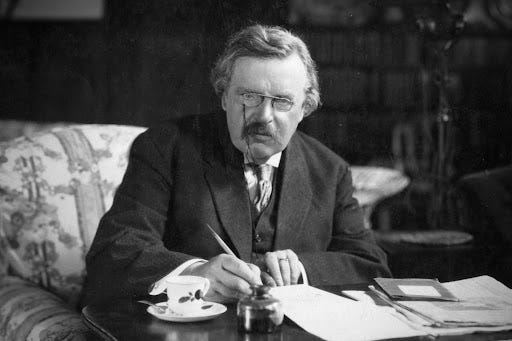
As the, likely apocryphal, G.K. Chesterton quote goes, “It pays to keep an open mind, but not so open that your brains fall out.”
There is a path to walk (and I don’t think it’s a tightrope, there is room for our communities to work and walk together), between being so open minded that we lose our guardrails for the ethically acceptable and morally desirable, and pointlessly decrying cultural differences that actually have no bearing on another person’s life, which, incidentally, includes versions of identity politics on the left AND the right.
So far, the unique success of Australian Liberalism through the 1900s and early 2000s has provided a largely effective bulwark against local violence, sectarianism and authoritarianism.
It is notable, given that we are arguably the most multicultural country in the world, with one third of our population born overseas. People arrive here to flourish. It is the best place to live in the world. For a reason.
Liberalism asks us to act as though the people around us a more or less good people. That we are, serviceably enough, trustworthy. That we won’t intentionally cause harm to others, in fact that we would help when we witness suffering, that we are aspirational and industrious, and operating using our own personally-considered conscience. Liberalism respects institutions that reflect these values - democracy, the legal system (including citizen juries), universities, the media.
We seek institutions that work for the empowerment of their citizens and not the other way ‘round (that is, authoritarianism).
There is also a shared belief that individually achievable economic security is an integral part of a liberal society. Australia has been an abundant place where there are enough resources to go around, and these resources are broadly accessible (though I referred to Australia’s rising Gini co-efficient in my first Substack post), where hard work and knowledge has generally been rewarded with increased financial agency.
While not the focus of this post, without the prospect of financial empowerment that is linked to a transparent and accountable economy, Liberalism cannot flourish.
Edmund Fawcett suggests that Liberalism embodies four core ideas that distinguish it from other ideologies, they are:
tolerance for philosophical conflict
resistance to power
progress and
respect.
He represents this through a loose definition, that…
Liberalism is “a search for an ethically acceptable order of human progress among civil equals without resource to undue power.”
Liberalism aims to create a society where we respect a person’s right AND responsibility to choose their own path in search of a good life, as long as it doesn’t harm others. And importantly, it is a search. We never arrived at a fabled promised land. We are undertaking the shared project of a constant seeking for the best possible reality.
It is important to point out that that Liberalism therefore necessarily takes on the flavour of what is ethically acceptable in the society in which it flourishes.
Australian Liberalism has its own unique flavour. Something like, Eucalyptus Liberalism. Our nation’s roots, branches and blossoms. Relying on healthy soil and providing Australia’s canopy.
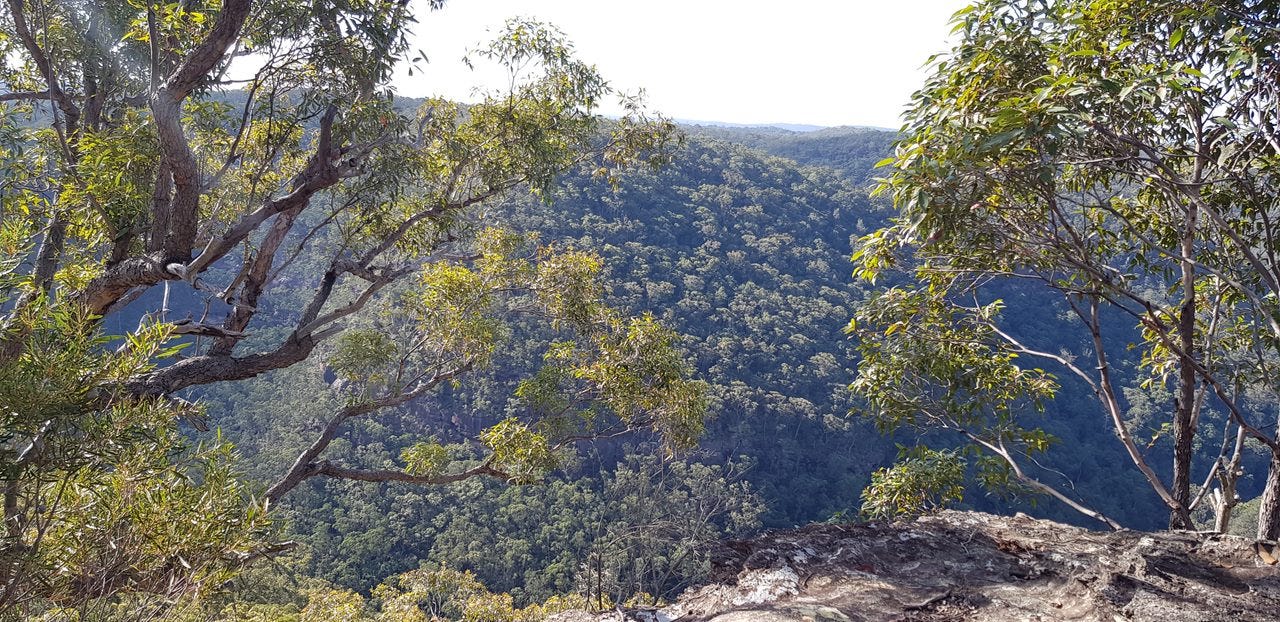
Our Liberalism naturally encapsulates the cultures of our three stages of population growth: indigenous, colonial and post-WWII migration. This is a unique cultural situation that gives us an opportunity, unlike any other nation, to demonstrate what good living looks like.
And perhaps Australian Liberalism is therefore the perfect argument against Extreme Liberalism; that in fact the antidote to extremism is the constant seeking of a healthy liberal society.
Calling out bad ideas and championing good living.
It follows then, that we must lawfully decry and restrict actions that are antithetical to core liberal principles, to protect our guard rails, explaining and living the values we hold dear.
The Neo-Nazis who marched outside Parliament, for example, should be charged under the Crimes Amendment (Inciting Racial Hatred) Act 2025.
Cleric Al Samail should be removed from the NSW Faith Affairs Council immediately and with clear explanation. The perfect candidate to appoint in the role is someone like Dr Jamal Rifi.
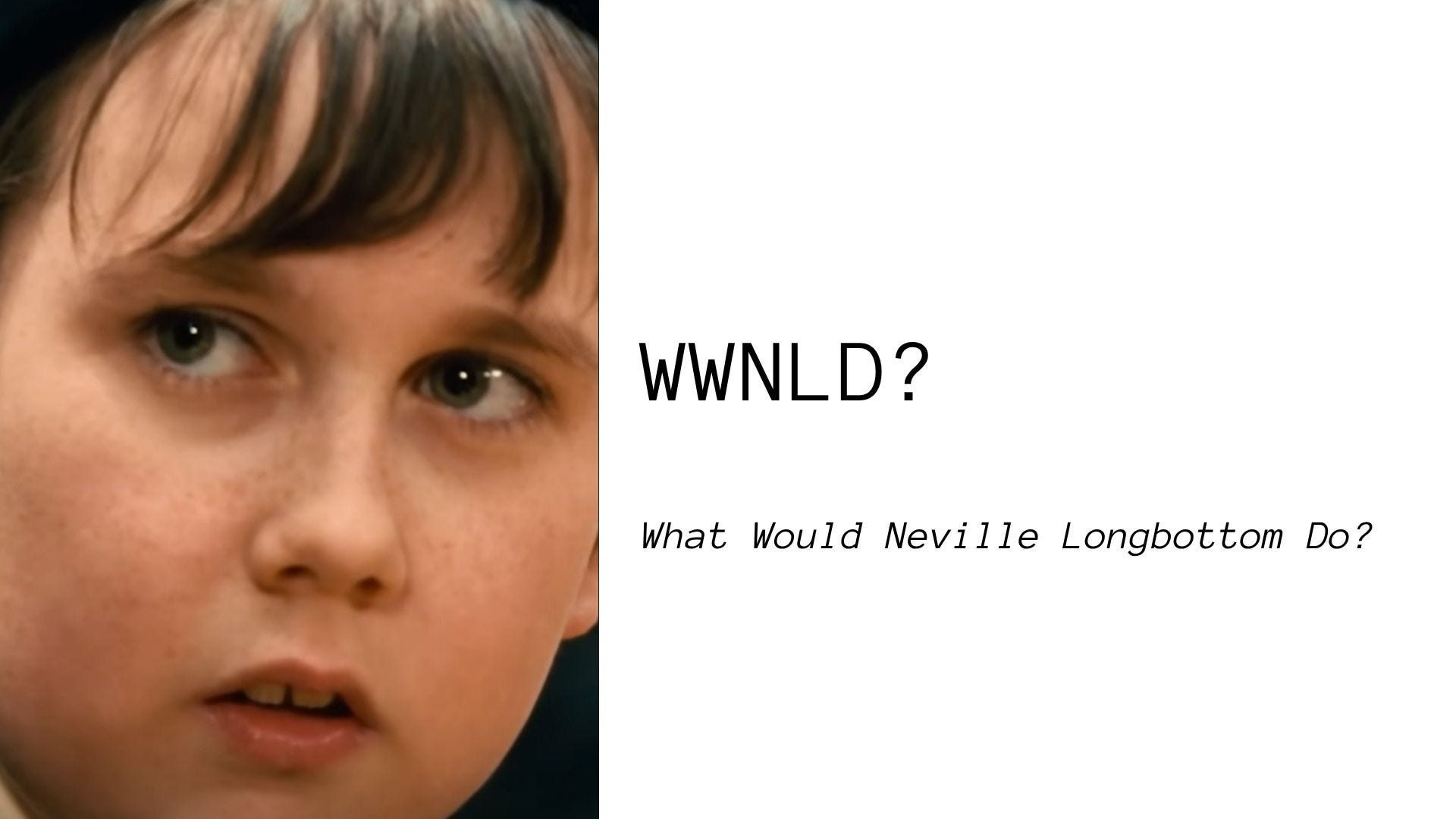
In calling out bad ideas we can take a leaf from Neville Longbottom’s book.
Dumbledore said, “There are all kinds of courage. It takes a great deal of bravery to stand up to our enemies, but just as much to stand up to our friends.”
5 POINTS TO GRYFFINDOR! GRYFFINDOR WINS!!
We must feel supported and empowered in drawing clear distinctions between living firm and passionate Liberalism, which sometimes includes asking our friends challenging questions and having the courage to listen, and falling down the rabbit hole of extremist ideologies through ignorance, laziness or fear.
Because, in the end, freely enjoying the nuance of passion without recourse to extremism is one of the wonderful gifts of Liberalism.
Our unique opportunity and good living
Noted Australian historian David Kemp wrote in ‘A Liberal State’ that in the 1920s, “as liberalism in Europe quailed before the burdens of history, Australians had an opportunity, afforded to few other people to attempt to build a society around principles of equal human dignity.”
We still have that rare opportunity today.
Our Australian spirit of Liberalism is well captured in point 10 of Robert Menzies’ ‘We Believe’ statement, delivered in 1954 on the occasion of the tenth anniversary of the formation of the Liberal Party. It says,
We believe that liberalism means flexibility and progress. Its principles and its spiritual and intellectual approach enable it to meet and deal with new changing social and economic circumstances. By elevating the individual it meets and defeats the terrible doctrine of the all-powerful state.
And, I would add, the terrible doctrines of extremist groups seeking power.
Liberalism is something like the pursuit of a civil and civilised society that relies on the state less and less, and relies on the individual and norms more and more. Yet, it is distinct from libertarianism which sees no role for the state, and, naively in my view, does not imagine that a forceful few will seek to overpower the ordinary majority.
This is why it is critical to distinguish between passion and extremism.
Liberalism maintains the fundamental role of a democratically elected government and institutions that create, interpret and enforce the laws which represent our social and cultural reality at any given moment in time.
Nevertheless, in ‘The Liberal State’ Kemp quoted John Stuart Mill in On Liberty, “The … most cogent reason for restricting the interference of government is the great evil of adding unnecessarily to its power.”
Today’s Liberalism goes further. It desires the restriction of any influence with authoritarian aims. This captures the thrust of dangerous extremist movements which seek to add to their power, increasingly through violence.
This means that seeking a thriving liberal society is the responsibility of all citizens, not only the state.
Because extremists seeking power may or may not be institutionalised. It may be through the government-appointed NSW Faith Affairs Council or Neo-Nazis clad in head-to-toe black on city streets.
Terror can be just as powerful and pervasive outside of an organised sect, ethereal and pregnant with potential harm to strike at any moment, as it is when administered by an institution.
So, we must find our individual hope and shared aspiration amongst the fear.
And I feel that fear too.
But we must be willing to work for and to live the ethical guardrails of our society, which rely not on a person’s skin colour or religion, but on the willingness to find the core similarities which allow co-existence at worst and collaboration at best.
It means connectivity and diversity. Something like preserving a biodiverse social community that is interconnected, intricate and precious.
Australia’s compulsory voting laws and bicameral, representative Parliamentary chambers serve as a naturally centralising force. The bell curve of political expression is fairly represented, particularly through the inclusion of the preferential voting system.
It means power and responsibility rests with every voting aged citizen. It trusts the polity to discern the best outcome for the most amount of people while protecting the minority voice.
We are still a small enough nation by population with a small enough, trusted news network that we have a sense of shared reality, despite our geographical bulk.
(Incidentally, I was worried to hear rumours that Channel 10 would remove its weather segment in a recent program rescheduling. Because the small act of knowing if the good people of Mataranka or Marion Bay are sweating it out in ruggers or shivering under Drizabones, gives us a way to connect with our fellows thousands of kilometres away.)
There is still hope in connecting our communities through shared reality and a pull to faith in one another over fear.
Running sporting programs like Bankstown PCYC’s Savannah Pride Basketball teams see migrants and refugees play with established local community members, offering fellowship and purpose.

Finding ways to utilise new technology, like LLM-based AI technologies, built like a chatbot, to deradicalise individuals. Tools that are apparently having more success than human attempts.
Given ASIO’s security concerns, the government should consider restarting the NSW Countering Violent Extremism Program, with sports and arts a focus of activity.
I’m not saying that Australian Liberalism has created a perfect or easy place for any particular group, and some, like Aboriginal people and non-Anglo migrants have at various times been far more maligned than others.
But the broad sweep suggests progress for those who eschew extremism and work in service of the uniquely Australian liberal project, for their loved ones and the future.
Most of us treat our natural human fears with loving relationships, service to others and acceptance.
And finally…
No splinters.
Liberalism is not about fence sitting.
It is holding views that allow room for others, but not to the extent that the roominess becomes so vast that the roof caves in.
The roof is the cover of values that unite us. When the extremes prevail, there is no middle pillar to bolster the home. If there is so much space between us that we cannot communicate, we lose the structure that allows us to live as a free and tolerant society.
And tolerance does not mean acceptance, but it does mean, to be trite, to ‘live and let live’.
The answer is never to pander to one extreme or the other.
It is to seek common values amongst the ties that bind us and protect those passionately. In Australia, liberal democratic values have made our country resilient and prosperous.
Without Liberalism, we will struggle to find solutions to complex issues. Improving housing through tax reform, achieving net zero by 2050, economic growth and shared prosperity, international trade relationships, cultural harmony.
Crucially, we still have a critical mass of Australian people interested in building the economic independence of their families, who want to contribute to their communities and who understand that paying tax (though ideally less of it) is a form of quiet patriotism. People who would like to live free of the coercive influence of another. People who are committed to liberal values, even if they simply live them and don’t need a label.
But it is time to recognise the thing that binds us. That makes our lives liveable and progress possible.
It is not perfect, but identifying with Liberalism offers togetherness and hope.
Take a moment to consider how you live liberal values every day. Identify yourself with these ideas. Or challenge them and let me know!
Knowing what we are against also demands knowing we’re for. We must lionise Liberalism. Become passionate for ourselves and each other. For our future, without any better way, we all have a responsibility to champion this cause.
A very thoughtful (and very readable) analysis. Appreciated the link to the Claytons ad too - the nostalgia!
Thanks for writing this, it clarifies a lot, your articulation that Liberalism is the only way forward truely hit the mark.